
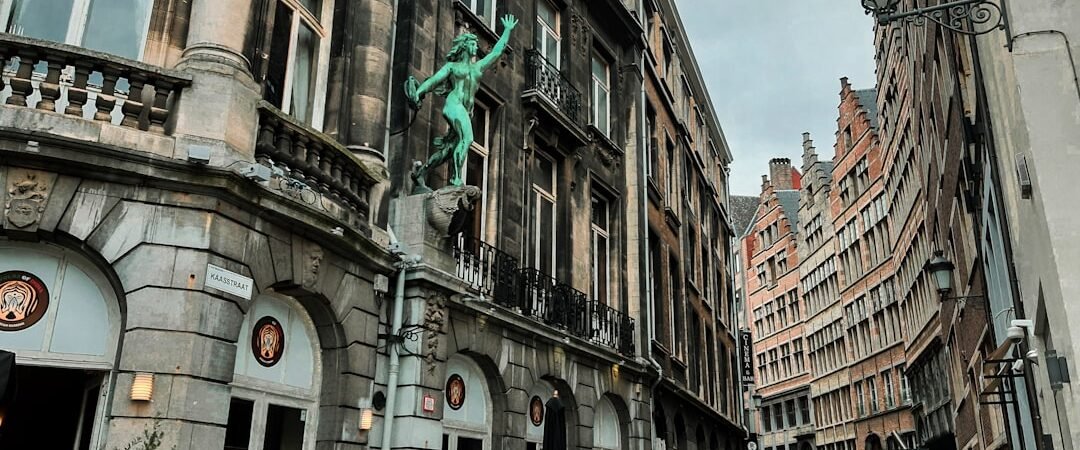
The story of Belgian fashion designers in Antwerp begins with a van, a pile of graduate collections, and a 1986 drive to London. Six alumni of the Royal Academy of Fine Arts showed their work there and the British press coined a label that stuck: the Antwerp Six. That single moment turned a North Sea port known for diamonds and shipping into one of the most quietly influential fashion capitals in Europe, and it reframed what the city expected of itself.
Antwerp and the Six: How a Port City Became a Fashion Capital
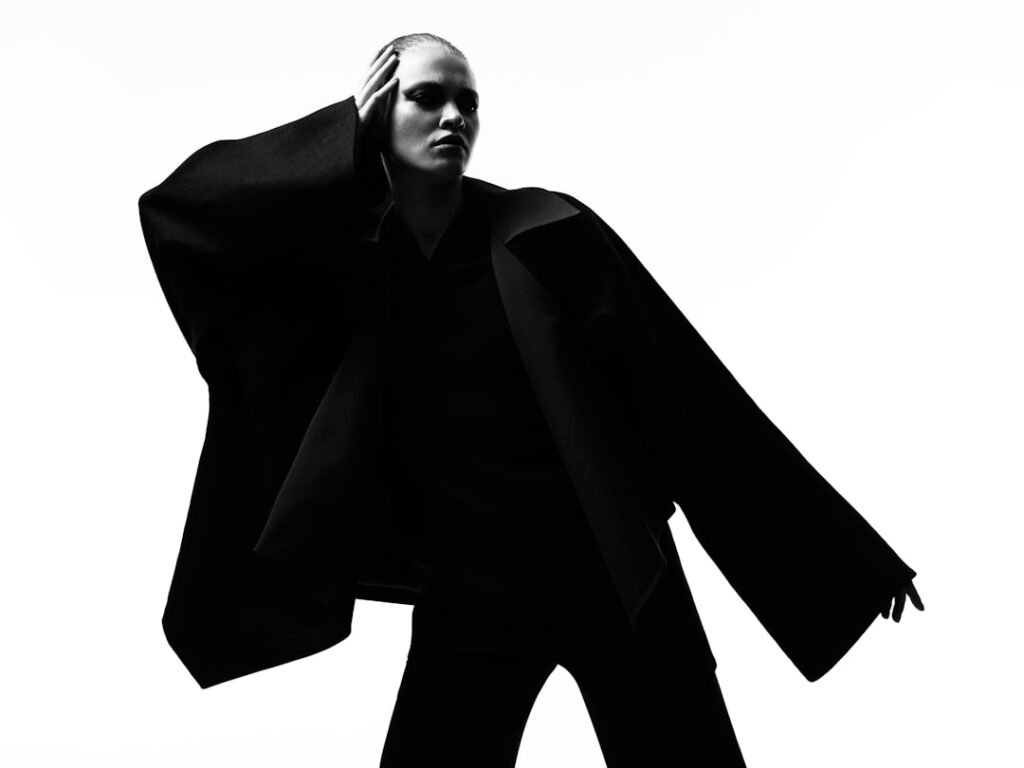
Antwerp was never supposed to produce fashion. It was a trading city, a diamond hub, a place where cargo moved through the port and money changed hands in the old town. What it had, though, was the Royal Academy of Fine Arts Antwerp, founded in 1663 and one of the oldest art academies in the world. Its fashion department, launched in 1963 under the guidance of figures like Mary Prijot and later Linda Loppa, operated with a philosophy that set it apart from Paris or Milan: design from the inside out, let concept drive silhouette, and treat each collection as an artistic statement rather than a commercial season.
The Six who drove to London in 1986 were Dries Van Noten, Ann Demeulemeester, Dirk Van Saene, Walter Van Beirendonck, Marina Yee, and Dirk Bikkembergs. Their work shared nothing obvious: Van Noten’s painterly prints, Demeulemeester’s monochrome poetic tailoring, Van Beirendonck’s subversive color and playful provocation. What united them was an attitude, not an aesthetic. They weren’t trying to be Belgian or even particularly Antwerpian. They were simply making work that felt personal, rigorous, and resistant to trend. The British fashion press, hungry for something after the spectacle of early-eighties London, latched on, and the mythology of Antwerp fashion was born.
What kept the mythology alive was the city’s refusal to dilute itself. Unlike Paris, which absorbed external talent into its grandes maisons, Antwerp kept its designers close. The Academy stayed the gravitational center. Linda Loppa, who led the fashion department from the early 1980s, built a system where students graduated into a city that knew their names and supported their independence. By the 1990s, Antwerp fashion wasn’t a movement you joined from elsewhere; it was something you trained into, block by block, on streets you walked every day.
The Atelier Map: Where the Designers Work and Show
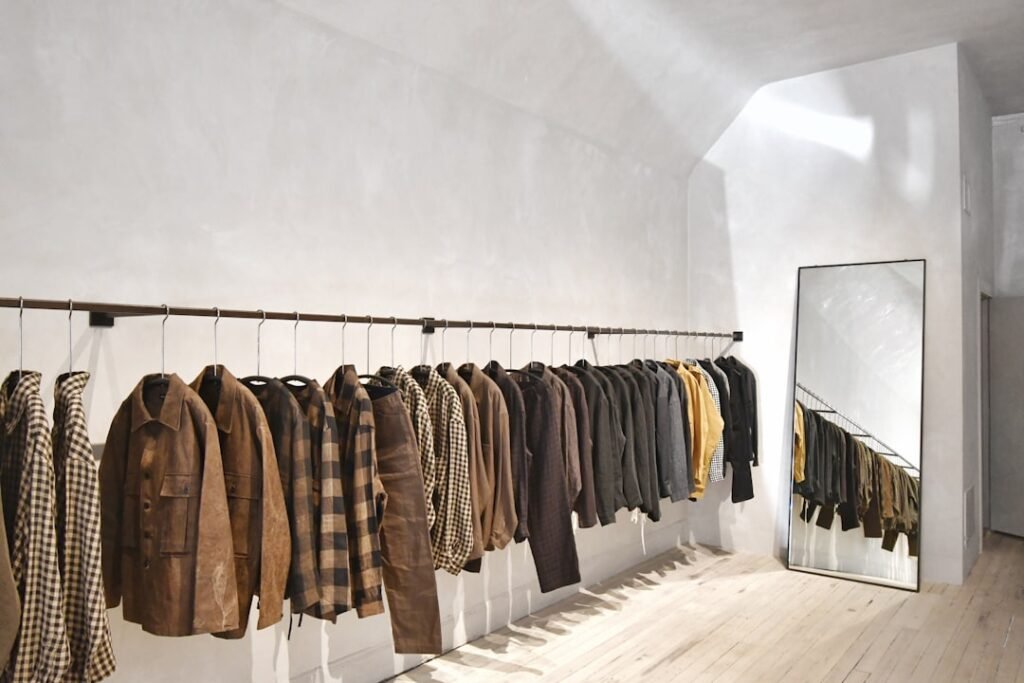
The Antwerp fashion scene is concentrated in a remarkably small radius, almost entirely walkable, clustered around Nationalestraat and the streets branching off it. Several original Six members and their successors still maintain ateliers and shops in the city today. Below is a working map of the key sites.
| Designer / Site | Location | Status | What You’ll Find |
|---|---|---|---|
| Dries Van Noten (Het Modepaleis) | Nationalestraat 16 | Active boutique | The designer’s flagship in an 1880s townhouse; men’s and women’s collections, archive pieces, the famous garden courtyard visible from the fitting rooms |
| Ann Demeulemeester | Leopold de Waelplaats | Historic flagship site | The minimalist former boutique (now other use); still a pilgrimage stop for the silhouette of the building itself |
| Dirk Van Saene (DVS) | Kammenstraat | Active shop/studio | Boutique and atelier of the most introverted of the Six; intimate, appointment-friendly, often showing current work |
| MoMu (Fashion Museum Antwerp) | Nationalestraat 28 | Active museum | Rotating exhibitions of contemporary and historical fashion; reopened in 2020 after a major renovation |
| Royal Academy of Fine Arts, Fashion Dept. | Mutsaardstraat 31 | Active school | The fashion department where the Six studied; annual graduation shows in June are a city-wide event |
| Walter Van Beirendonck | Atelier in Antwerp (private) | Active designer/educator | Head of the Academy’s fashion department since 2007; atelier not open to public but his presence defines the district |
| Christian Wijnants | Atelier in Antwerp (private) | Active designer | Academy graduate known for knitwear and texture; atelier visits by appointment through industry channels |
| Graanmarkt 13 | Graanmarkt 13 | Active concept store | Curated stockist carrying Belgian and international designers, with a restaurant on the upper floor; not a single-designer site but essential to the district |
What the table can’t convey is the scale. Nationalestraat itself is a narrow, understated street of about 600 meters. Dries Van Noten’s shop sits at number 16, and MoMu is at number 28, barely two minutes apart on foot. The intimacy is the point: these aren’t global flagships positioned on grand boulevards. They’re working addresses where designers actually live and produce, and the distance between them is the distance between neighbors.
Beyond the Six: The Next Generation Defining Antwerp Now
The Antwerp Six opened the door, but the designers who came through the Academy in the 1990s and 2000s are the ones who have kept the city current. Several still work in Antwerp and carry forward the philosophy of concept-first design without imitating their predecessors.
A.F. Vandevorst (An Vandevorst and Filip Arickx)
Graduates of the Academy in 1991, the duo built a label known for architectural construction, medical-white palettes, and a recurring Red Cross motif that blurred fashion and symbolism. Though they stepped back from the main ready-to-wear line in 2020, their influence on Antwerp’s reputation for intellectual design remains deep. Their atelier and showroom presence in Antwerp helped establish the model of the designer-as-auteur that the city is known for.
Stephan Schneider
A German designer who came to Antwerp for the Academy and never left, Schneider is the rare figure who both maintains an independent label and teaches at the school. His work is built on systems: each season starts with a narrative or a found object, and the collection is constructed to tell that story across every garment. His atelier in Antwerp operates with a quiet, almost artisanal scale that feels quintessentially local.
Haider Ackermann
Ackermann studied at the Antwerp Academy and carries its influence in his approach to fabric and drape, even as his career has taken him to Paris and beyond. He represents the export side of Antwerp: designers who train in the city’s rigorous, concept-driven environment and then project that sensibility onto a global stage. Ackermann’s velvet tailoring and layered silhouettes read as Antwerp sensibility rendered in luxury materials.
Glenn Martens and the Post-2010 Wave
The most recent Academy graduates to break through globally include Glenn Martens, whose work at Y/Project and later Maison Margiela carried the Antwerp tradition of deconstruction and conceptual provocation into a new decade. Martens didn’t stay in Antwerp, but his training is visible in the structural experimentation that defines his work. The Academy continues to produce designers at this level annually, and the June graduation show remains one of the most scouted events in European fashion education.
Visiting Antwerp: Showrooms, Shops, and the Fashion District Walk
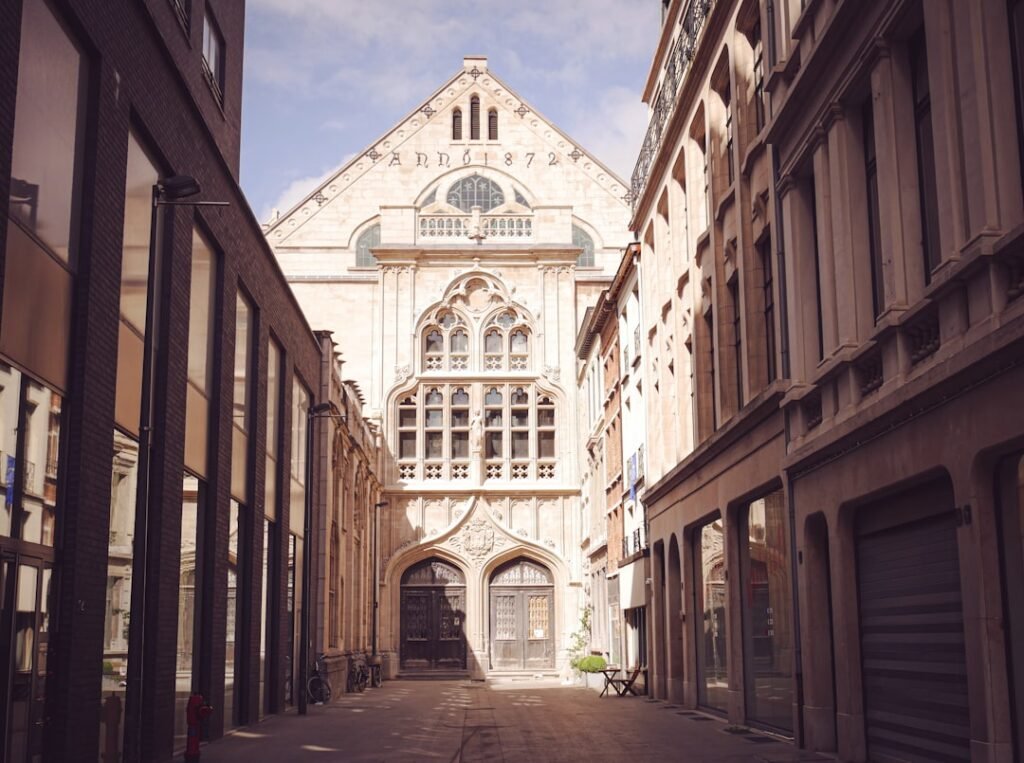
The Antwerp fashion district is compact enough to walk in an afternoon, and doing so gives you a tactile sense of how the scene functions: not as a tourist attraction but as a working neighborhood. Start at the north end of Nationalestraat and work south. The walk covers roughly a kilometer and can be stretched with detours into Kammenstraat and the surrounding side streets.
Nationalestraat: The Spine
Begin at Dries Van Noten’s Het Modepaleis at Nationalestraat 16. The shop occupies an 1880s townhouse, and the interior is largely unchanged from when Van Noten opened it in 1997. The ground floor holds the current men’s and women’s collections, but the real character is in the details: the worn wooden staircase, the garden visible through the back, the sense that you’re inside someone’s personal project rather than a retail concept. Walk two minutes south to number 28 and you’re at MoMu, the Fashion Museum of the Province of Antwerp. After a two-year renovation that restored its 19th-century building while reconfiguring the exhibition spaces, MoMu reopened in 2020. Its programming rotates between contemporary designer retrospectives, thematic exhibitions, and deep dives into the Belgian fashion archive. Check the current exhibition schedule before visiting, as the museum closes between shows.
Kammenstraat and the Side Streets
One block east of Nationalestraat, Kammenstraat runs parallel and holds a cluster of independent boutiques and concept stores. Dirk Van Saene’s DVS is here, a small, personal space that reflects the designer’s famously private approach. The street also carries work by younger Belgian designers and select international labels that share the Antwerp sensibility for concept-driven, anti-trend design. Graanmarkt 13, a short detour north, is a curated concept store with a restaurant upstairs; it’s not a single-designer destination, but it’s the best place in the city to see how Antwerp’s fashion community contextualizes its own designers alongside global peers.
The Royal Academy and Mutsaard
The fashion department of the Royal Academy of Fine Arts is at Mutsaardstraat 31, a roughly fifteen-minute walk north of Nationalestraat. The building itself is modest; you won’t see it on a standard tourist itinerary. But if you visit in late June during graduation week, the surrounding streets fill with international press, buyers, and alumni, and the student runway shows become the closest thing Antwerp has to a citywide festival. Outside of graduation season, the department isn’t open to the public, but the walk from Nationalestraat to Mutsaardstraat passes through the residential streets where many of these designers live, and the atmosphere is unmistakable: a city where fashion is not an industry district but a fact of the neighborhood.
Why Antwerp’s Design Philosophy Endures
Antwerp’s relevance forty years after the Six drove to London comes down to a stubborn commitment to the same principle: the designer’s voice leads, and everything else, distribution, commercial pressure, even the city’s own mythology, follows. That principle is enforced structurally. The Academy still trains students to think conceptually before commercially. The ateliers still operate at a scale where the designer is present. The city is still small enough that these people know each other, teach each other, and pass the philosophy forward through direct contact rather than branding.
What this means for anyone interested in Belgian fashion designers, Antwerp as a destination, or the broader legacy of the Antwerp Six, is that the city isn’t a museum of its own past. It’s a working atelier at the scale of a neighborhood. The shops, the museum, and the school are all within walking distance of each other because the people who built them never moved away. The philosophy endures because it’s embedded in the geography.
At Lazri Boutique, we follow these designers because their approach to material, silhouette, and longevity aligns with how we think about luxury: as something that earns its place over time, not through trend. If you’re planning a visit to Antwerp or want to explore how the city’s design philosophy translates into pieces you can wear, our team is here to help. Discover our edit of Belgian and European designers, or let us guide you toward the collections that best reflect Antwerp’s enduring sensibility.
Frequently Asked Questions
Who are the Antwerp Six?
The Antwerp Six are Dries Van Noten, Ann Demeulemeester, Dirk Van Saene, Walter Van Beirendonck, Marina Yee, and Dirk Bikkembergs. They graduated from the Royal Academy of Fine Arts Antwerp and showed their collections together in London in 1986, earning the name from British fashion press.
Where is MoMu, the Antwerp fashion museum?
MoMu (Fashion Museum of the Province of Antwerp) is at Nationalestraat 28, a two-minute walk from Dries Van Noten’s flagship shop at Nationalestraat 16. It reopened in 2020 after a major renovation and hosts rotating exhibitions of contemporary and historical fashion.
Can you visit the Royal Academy of Fine Arts fashion department in Antwerp?
The fashion department at Mutsaardstraat 31 is not open to the general public, but during the annual graduation shows in late June the public can attend student runway presentations. These shows are widely attended by international press and buyers.
Do the Antwerp Six still work in Antwerp?
Dries Van Noten maintains his flagship shop at Nationalestraat 16. Walter Van Beirendonck heads the Academy’s fashion department and works in the city. Dirk Van Saene keeps a boutique on Kammenstraat. Others, like Ann Demeulemeester, have stepped back from active design but their historic sites remain landmarks.
What is the Antwerp fashion philosophy?
Antwerp’s design philosophy centers on concept-driven, highly personal design where the designer’s voice leads and commercial trend follows. It emphasizes rigorous construction, intellectual narrative, and long-term relevance over seasonal commercial pressure.