
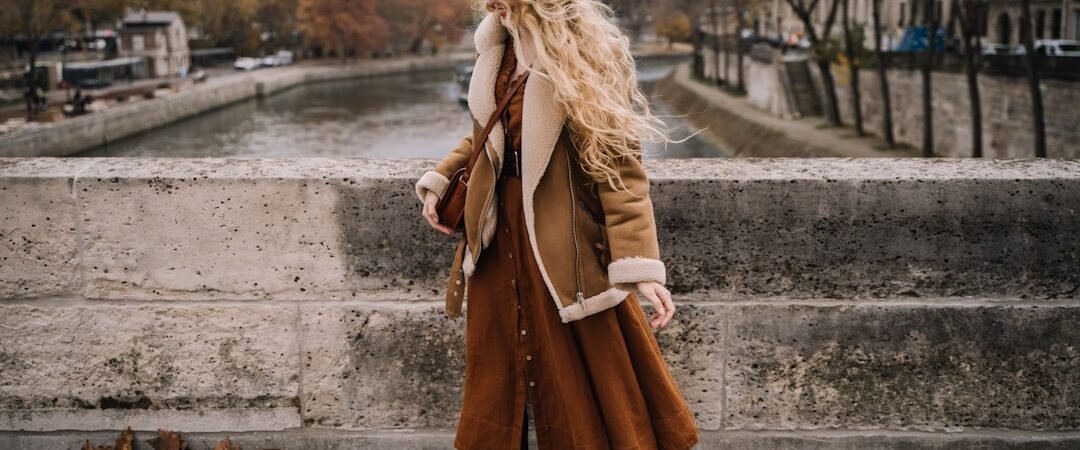
Paris in winter is not about packing more. It is about packing correctly. The temperature hovers between 3°C and 8°C from December through February, and the cold is damp rather than deep, which means the wrong fabric holds moisture against your skin while the right one insulates and breathes. When travelers ask us what to wear in Paris in the winter, the answer is never a long list. It is a formula: one coat, one boot, one scarf, and the layers that connect them.
The Coat: One Great Piece That Carries the Season
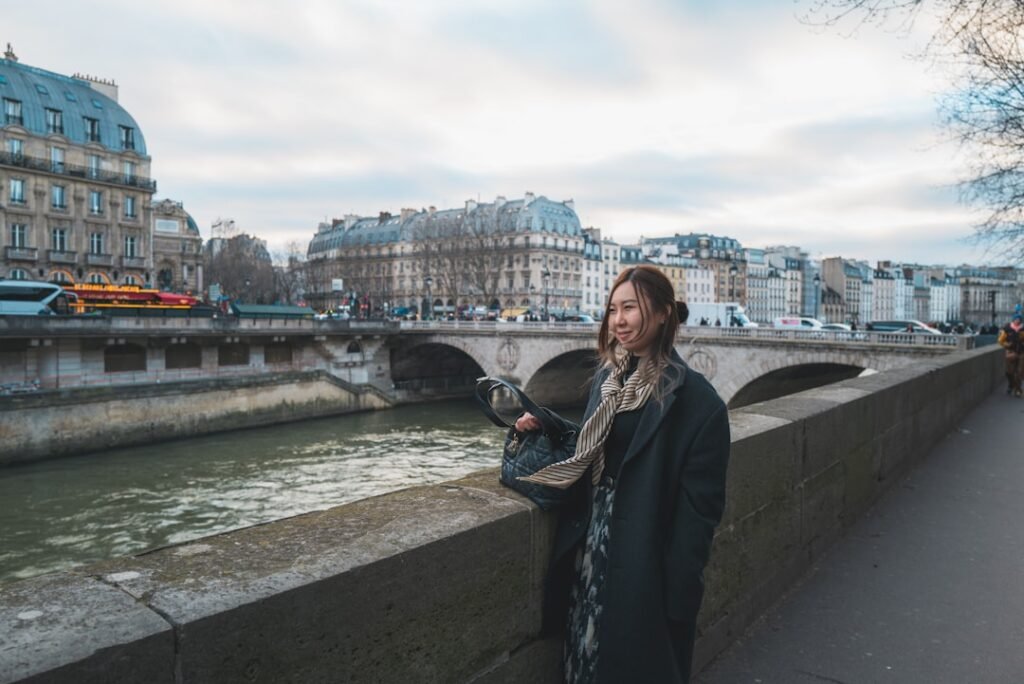
The coat is the outfit in January Paris. Everything beneath it is a supporting layer, glimpsed at the collar and cuff, but the silhouette people register first is the coat. Parisians favor length, a long line that falls below the knee and often to mid-calf, which does two things at once: it covers the body and it elongates the figure. A cropped puffer on the Champs-Élysées reads immediately as visitor. A long wool coat, belted or relaxed, reads as local.
Wool Melton for Structure
Wool melton is the workhorse fabric of the Parisian winter coat. It is densely woven, almost felted, which means it blocks wind without the bulk of a quilted jacket and holds its shape over years of wear. A melton coat in charcoal, camel, or navy will sit over a knit and trouser without pulling at the shoulder, and the weight of the fabric means the hem falls clean rather than fluttering. If you invest in one piece for the season, make it this.
Cashmere for Softness and Temperature
A cashmere coat is lighter than melton and considerably softer, but it handles the Paris damp beautifully because cashmere fibers wick moisture without losing warmth. The trade-off is durability: cashmere pills at friction points and shows wear faster than a dense wool. Choose cashmere if your coat doubles as an evening piece, if you are dining in the 6th or attending a gallery opening where the coat stays on your shoulders. Choose melton if you are walking the city for hours.
Shearling for the Coldest Stretch
When the temperature dips toward freezing and the wind funnels down Boulevard Haussmann, shearling earns its place. A shearling coat or jacket traps air in the fleece lining, which insulates far better than woven wool of the same weight. The Parisian approach is to choose shearling with a clean exterior, suede-finished and unembellished, rather than the fuzzy outward shearling that reads as alpine. Worn open over a fine-gauge knit, it works from morning café to dinner without looking overstuffed.
The Boot: What Works on Wet Pavement and Still Looks Considered
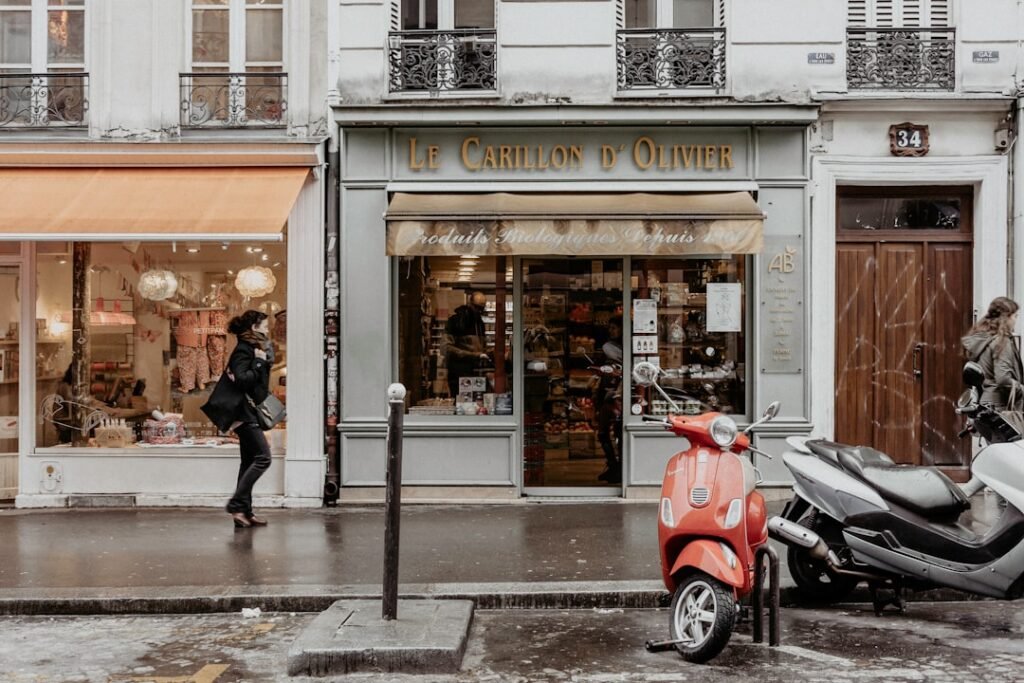
The boot in Paris is always an ankle boot, and it always sits over the trouser, not under it. This is a dressing code, not a preference. When the hem of a wide-leg trouser falls over the top of the boot, the line from hip to ankle reads as continuous, and the boot becomes a grounding element rather than a separate piece. Tucking the trouser into the boot breaks that line and shortens the leg, which is why you rarely see it done well in Paris.
Leather and the Damp
Calfskin leather is the standard. It takes a polish, ages gracefully, and resists the light rain that falls on most January afternoons. Suede, by contrast, will watermark. If you bring suede boots, expect them to look tired by day three unless you treat them and avoid puddles entirely. For a city where rain is frequent but rarely torrential, a smooth calfskin boot with a rubber sole insert is the pragmatic and polished choice.
The Heel Question
Paris is a walking city. Cobblestones in Le Marais, uneven pavement in Montmartre, long stretches of gravel in the Tuileries. A block heel of 3 to 4 centimeters gives just enough lift to flatter the trouser line without making the walk punitive. A stiletto, even a low one, will catch in the cobblestone gaps. A flat sole is acceptable but shifts the outfit toward casual, which may not be what you want for dinner. The block heel is the middle path.
The Scarf and the Layering System Beneath
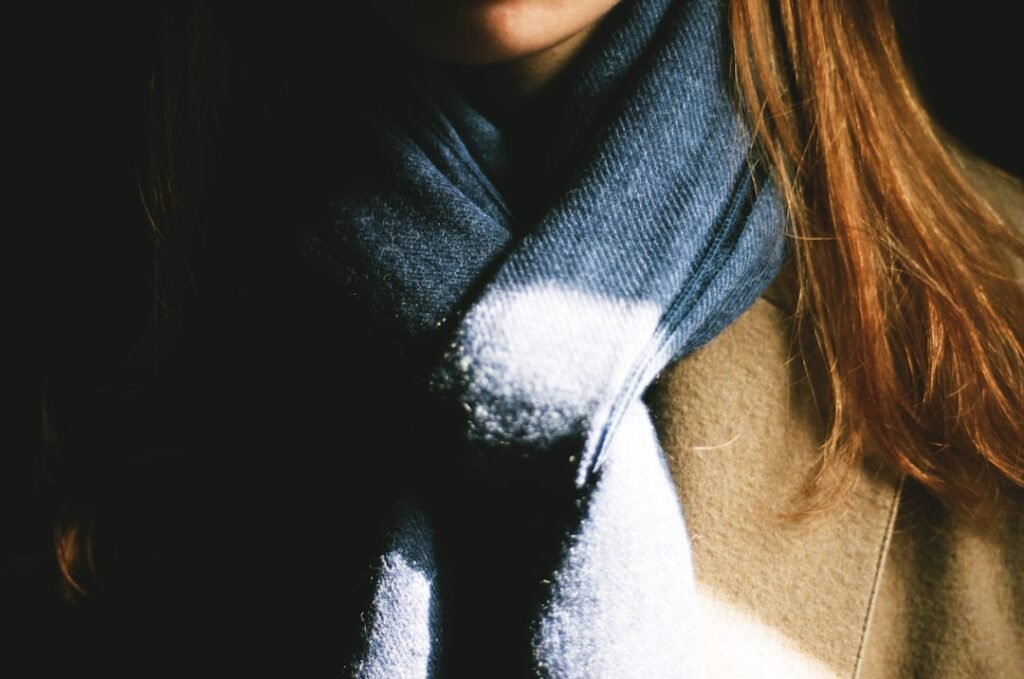
The scarf is where Parisian dressing reveals itself, and it is not about the scarf alone but about the layers beneath it. A coat buttoned to the neck with nothing underneath looks severe. A coat worn open with a visible knit, a collared shirt, and a scarf looped through creates the depth that reads as considered. The scarf is the connective tissue between the coat and what is under it.
The Knot
Fold a long cashmere or wool scarf in half lengthwise, drape it around the neck with the loop on one side and the loose ends on the other, then pull the ends through the loop. This is the Parisian knot, and it sits flat against the chest, fills the gap between the coat lapels, and stays put without adjustment. A loose drape looks elegant in a photograph but spends the day slipping. The knotted version is practical and precise.
The Layers Beneath
Start with a fine merino base layer or a thin cotton tee. Over that, a fine-gauge knit, cashmere if possible, in a neutral that does not fight the coat. Over that, optionally, a collared shirt with the collar visible above the knit, which adds a layer of formality and texture. The scarf sits on top of all of it, filling the neckline of the coat. Three thin layers insulate better than one thick one because the air trapped between each layer does the warming, and you can remove one indoors without losing the entire system.
| Layer | Material | Function in the Paris Winter System |
|---|---|---|
| Base | Merino wool or fine cotton | Wicks moisture, sits flat against skin, adds warmth without bulk |
| Mid | Cashmere or fine-gauge wool knit | Primary insulation, visible at the collar and cuff, sets the color story |
| Collared shirt (optional) | Poplin or Oxford cotton | Adds structure and formality, collar visible above the knit |
| Scarf | Cashmere or silk twill | Fills the coat neckline, Parisian knot keeps it in place, adds color or print |
| Coat | Wool melton, cashmere, or shearling | Outer shell, defines the silhouette, blocks wind and damp |
Day to Evening in January Paris
The formula works because it transitions. During the day, the coat is buttoned, the scarf knotted, the boot walking you through the 7th arrondissement. In the evening, the coat stays on but opens to reveal the knit and collar, the scarf is loosened or removed entirely, and the same boot carries you into a restaurant in Saint-Germain. Nothing changes except the way the pieces are worn, which is the entire point. A capsule that requires a wardrobe change between afternoon and dinner is not a Paris capsule.
For a dinner that might run late, the one adjustment worth making is the scarf. A silk twill scarf, folded narrow and knotted once at the side of the neck, replaces the daytime cashmere and instantly shifts the register from practical to polished. It weighs nothing and folds into a handbag. This single swap is how Parisian women move from daytime to evening without going home to change.
What to Avoid: the Tourist Tells
The Puffer Coat
A down puffer is warm, yes, but the Parisian winter does not demand it, and the silhouette is wrong. Puffers add volume at the torso and break the long, lean line that defines local style. If you own one and love it, save it for the Alps, not the Rue de Rivoli.
Sneakers With Everything
White Athletic Shoes
White running shoes with a winter coat is the most legible tourist combination in Paris. Clean leather sneakers in a neutral color, worn with denim rather than trousers, can work for a Saturday market walk. But the ankle boot is the shoe of the season, and substituting athletic footwear for it signals that you have not read the room.
The Backpack
A nylon daypack over a wool coat crushes the shoulder line and reads as transit, not style. A structured leather tote or a crossbody bag in calfskin carries what you need and sits flat against the body. If you must carry more, choose a leather top-handle bag and wear it on the crook of your arm, which is how Parisians manage the load without disturbing the coat.
Pack With Intention
The formula is not minimalism for its own sake. It is the recognition that Paris rewards coherence. One coat in a fabric that suits your itinerary, one boot that handles the pavement, one scarf that knots and stays, and three thin layers that work together beneath them. Pack those pieces, and you will dress each morning without thinking, which is the goal. The city does not require a new outfit every day. It requires the right outfit, worn well, for the weather that is actually there.
Have questions about building a winter wardrobe that travels? Our team at Lazri Boutique is here to help you choose the pieces that will carry you through the season and beyond. Explore the edit and discover what works for your next trip.
Frequently Asked Questions
How cold is Paris in the winter?
Paris winter temperatures typically range from 3°C to 8°C (37°F to 46°F) from December through February. The cold is damp rather than dry, which means it feels cooler than the thermometer suggests but rarely drops below freezing during the day.
Should I bring a puffer jacket to Paris in winter?
A puffer is not necessary for Paris winters and breaks the long, lean silhouette that defines Parisian style. A wool melton, cashmere, or clean shearling coat handles the damp cold better and looks more considered for both day and evening.
What kind of boots work in Paris in winter?
Ankle boots in calfskin leather with a low block heel are the standard. They sit over the trouser hem for a continuous line, handle wet pavement better than suede, and walk cobblestones without catching. Avoid stilettos and suede, which struggle on Paris surfaces.
How do you tie a scarf the Parisian way?
Fold a long scarf in half lengthwise, drape it around the neck, and pull the loose ends through the loop. This Parisian knot sits flat against the chest, fills the coat neckline, and stays in place without constant adjustment.
Can I wear sneakers in Paris in winter?
Clean leather sneakers in a neutral color can work for casual daytime walks, but white athletic shoes paired with a winter coat read as tourist. An ankle boot is the shoe of the season and works for both day and evening.